
Can Reiki help with perimenopause symptoms?
What I discovered when I stopped managing and started listening.
Can Reiki help with perimenopause symptoms?
I want to be careful about how I answer this question, because the easy answer isn't the useful one.
The easy answer is: yes, Reiki can help with perimenopause symptoms.
Hot flushes, poor sleep, anxiety, the strange emotional volatility that arrives without warning. There's reasonable evidence, and a great deal of practitioner and client experience, that shows that Reiki supports all of these.
But that answer, on its own, misses something important. It frames perimenopause as a problem to be managed, and Reiki as one of the tools available to manage it. And in my experience, both personal and professional, that's not quite the right way to look at it.
Let me tell you what I mean.
What was actually happening to me
I came to Reiki when I was two years post-menopausal. I was out ‘the other side’ but still struggling with hot flushes and disturbed sleep. I had spent my 40s being very good at functioning; at avoiding conflict; at overriding whatever my body was signalling in favour of what needed to get done. I suspect many of you reading this will recognise that pattern.
Perimenopause, for me, were horrid, hellish years, that I often refer to as my Walking Dead years, and the usual strategies of pushing through, staying busy, managing the discomfort began to cost more than they returned.
What I found, through my shift from business consulting to somatic work and Reiki practice, was that the symptoms I most wanted to get rid of were also the symptoms most clearly telling me something, especially after I received a diagnosis of breast cancer. These symptoms weren't malfunctions. They were a system under strain, making itself heard.
Reiki didn’t silence these signals, but helped me to stop fighting them long enough to actually make the changes my body was crying out for.
What perimenopause symptoms are often telling us
So many perimenopausal symptoms have a particular theme to them; too much heat, too much reactivity, too little stillness. The nervous system feels more exposed, sleep becomes unreliable and emotions move faster than we can process them.
For many women, this arrives as a shock. Not because the symptoms are unexpected - we've been warned about hot flushes - but because the usual internal tools stop working. The same energy and determination that carried us through demanding careers, relationships, families, begins to feel like it's working against us rather than for us.
What perimenopause often asks of us, underneath the symptoms, is a genuine change of approach to how we are living and experiencing our lives.
And that, for many women, can be the hardest part; harder, in some ways, than the night sweats!
When I work with clients in this phase, I'm not primarily trying to reduce their hot flushes, though that may happen. I'm working with the whole system, helping the nervous system find its way back to a more settled state, supporting the body's own capacity to regulate and creating the conditions for something to land that has been too busy to land.
The results vary, because bodies vary. But what I hear most consistently is not "my hot flushes are less frequent", though sometimes that too. It's: I feel more calm about what's happening to me. I feel more able to be in it rather than bracing against it.
The peri-menopause symptoms where I see Reiki help most
Since you may have arrived here with particular symptoms in mind, let me be as practical as I can.
Sleep. This is where I see the most consistent response. Not necessarily because Reiki directly induces sleep, but because it works with the nervous system dysregulation that so often underlies perimenopausal insomnia. The wired feeling at night, the inability to fully switch off; these tend to soften with regular sessions.
Anxiety and emotional volatility. Perimenopause can make emotions feel less buffered, closer, faster, harder to contain. Sometimes this can be a good thing, but more often than not, feelings of anger, irritability, fear and worry give us outcomes we don’t want.
Reiki works directly with the nervous system's threat response. Many clients notice that the gap between trigger and reaction widens after sessions; not because emotions are suppressed, but because there's more capacity to meet them and allow them to release safely.
The exhaustion that sleep doesn't fix. This one is subtler. A bone-deep tiredness that a good night's rest doesn't touch. Reiki, over time, seems to help restore something at a deeper level than rest alone can reach; a replenishment that feels different from simply being less tired.
Hot flushes. Honestly, this varies most. Some clients notice a reduction in frequency or intensity. Others don't. I still experience these and know that certain foods or particularly busier days can impact them, so they’ve become useful barometers for me and tell me that I need to slow down, even when I think I’m going slow enough.
What does seem to shift for most people is the relationship with them. The anxiety that so often precedes and amplifies a flush can lessen considerably, which changes the experience even when the flush itself remains.
What I'd want you to know before you book
One session is useful, but a course of sessions is more so. This isn't a sales pitch. It's the same logic as any therapeutic process. The nervous system takes time to learn a new pattern.
I liken my Reiki treatment plans to dropping a tennis ball from a height. On the first bounce, it bounces back but not the original height, and every bounce back up lowers again. It’s the same with whatever symptoms you come to see me for; symptons can often return after a few days but less so than before, and less so after each following session.
I also want to be clear that Reiki works alongside good medical care, not instead of it. If you're considering HRT or other interventions, please have those conversations with your GP.
Many of my clients use Reiki as one part of a broader approach, including myself during my own breast cancer treatment, and that seems to me entirely sensible.
What I'd gently suggest is this: if you've arrived at perimenopause still running on the same fuel of push-through and manage-it that got you here, it may be worth asking whether that approach is still serving you. Not because determination is a bad thing, but because this particular transition often calls for something different.
That, in my experience, is where Reiki tends to do its most interesting work.
I offer in-person Reiki sessions in Godalming, Surrey, and distance Reiki sessions for clients across the UK. If you'd like to talk about whether Reiki might be right for where you are right now, get in touch here.
About Karen
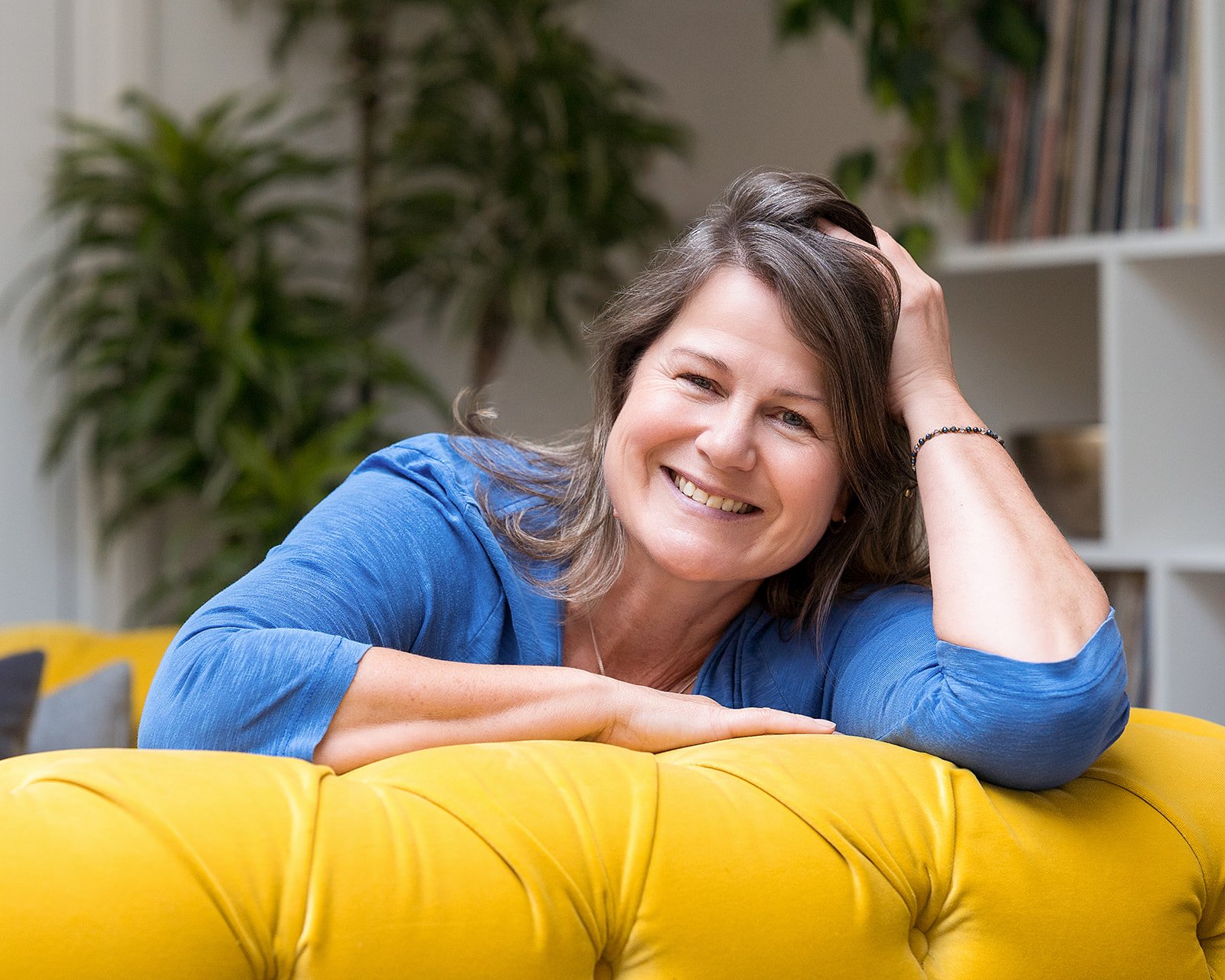
Karen Skidmore is a Reiki Master Practitioner (Usui tradition) based in Hindhead, Surrey. She works with over-thinkers, HSPs and midlife women navigating the physical and emotional terrain of perimenopause, menopause and beyond.