
I Started Adding Firebreaks to My Diary. Here's Why.
I had a habit of ploughing through my day.
Even if I was desperate for the loo, I would sit in my office chair and tell myself: ‘just do one more thing’.
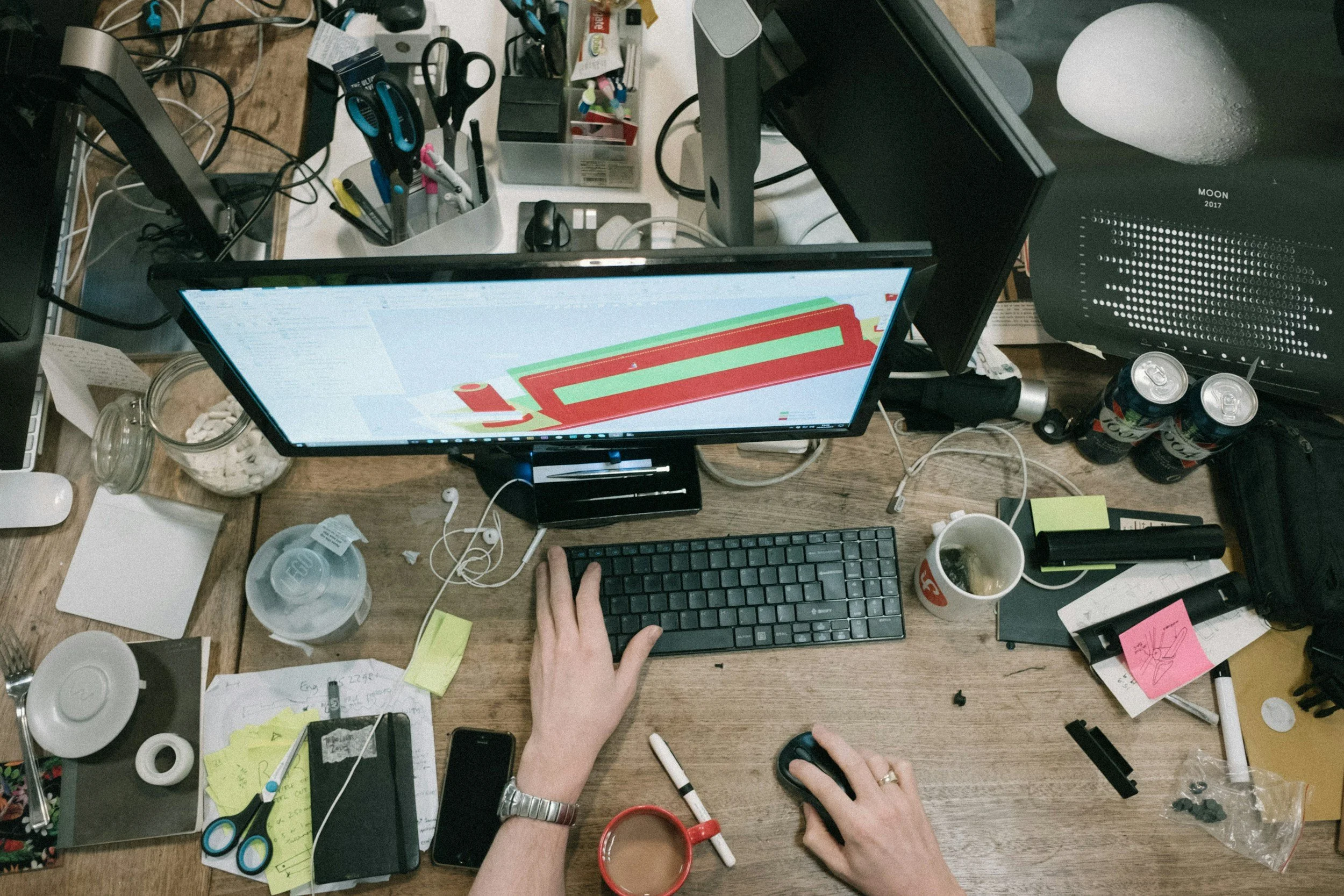
A full calendar felt good; I felt in control and booked appointments was a sign that I was capable, achieving success and in control.
Working like this didn’t happen overnight. In my 20s, I worked long hours because it was expected of me and also because I had the energy to keep on going. It felt good to work hard and then party hard on the weekends, and it more or less balanced out as I also had plenty of chill time on the sofa.
The excessive push to plough through began creeping up on me in my 30s, as I became a working mum with two children and a husband commuting into town. By the time I hit my 40s, reeling from losing my dad to cancer, I realised I was quite terrified of losing control.
So rather than deal with the grief and take my foot off the pedal, I pushed it harder to the floor.
My habit of ploughing on, even when I needed the loo, was completely engrained in me and if someone told me I was doing too much, I would puff out my chest in pride and thank them.
I didn't recognise it then, but what I was doing was keeping myself in a state of permanent overdrive. My nervous system was locked into go-go-go, with no signal that it was safe to stop. Staying busy was, in its own way, a coping mechanism, and as I went on with life, I did eventually crash and burn.
I am not alone in this pattern.
Many of us have dealt with loss, struggled to keep up with family life and/or pressured workload. We live in a world that rewards doing more, achieving faster, optimising everything.
And yet, somewhere underneath all that busyness, most of us know it isn't sustainable.
This was why I started building firebreaks into my week.
So what’s a firebreak?
In the natural world, firebreaks are strips of land - cleared ground, a river, a rocky ridge - that slow or stop the spread of wildfire. They don't put the fire out but interrupt it, giving everything around it a chance to survive and the fire to slow down.
The same principle applies to your week. A firebreak is a diarised space; protected time that interrupts the momentum before it becomes a blaze. It's a structure that gives you a chance to breathe and take stock, and can make everything else more sustainable.
Firebreaks can be daily, weekly, or monthly. Here's how each one works:
Daily Firebreaks
These are smaller than you think.
Diarising your lunch break. Adding ten minutes of time before and after meetings so you're not ricocheting from one to the next. Blocking a short walk if you know you need it. Even something as basic as stepping outside for five minutes counts.
The reason to put these in your calendar, even when they feel obvious, is that when you're in full plough-through mode, your brain treats everything without a slot as optional. By scheduling it, you're telling yourself: this matters.
Weekly Firebreaks
Taking time out to exercise/walk/gym or social time with friends sounds like something everyone would make time for, but if you are wired to keep going, these activities are often the first to go.
Weekly firebreaks are protected spaces that aren't about ticking things off your list. It's not productive in the conventional sense, and that's the point. Your nervous system needs signals that it's okay to downshift, and it can't learn that if every hour is spoken for.
Monthly/Seasonal Firebreaks
These are the weekends away, the days out, the longer pauses you've always meant to take but somehow another season passes and they haven't happened. Life moves fast when you're running on adrenaline.
You don't even need firm plans to block this time out. Simply blocking two or three days in your calendar, and leaving them deliberately empty, can be enough to hold the intention. The space itself sends a message, to your schedule and to yourself.
What if I just override them?
You can. Nobody's stopping you. But each firebreak in your diary is a small interruption in the pattern and a moment where you have to make a conscious choice rather than just ploughing through on autopilot.
Start with one. Just one a week, or even one a fortnight. Notice what happens. If you genuinely can't take it when the moment arrives, reschedule it rather than deleting it. Deleting tells your nervous system that you’re not taking this time out seriously and then you’ll keep over-riding the intention.
What if there's genuinely no space right now?
Then go long. Look two or three months ahead and block the time in advance. This is how I first started putting the bigger firebreaks into my diary because there was simply no space to fit a whole day out in the short term.
When you are ploughing through, you won't hit a finish line and suddenly feel ready to rest or take time out to do something you’d love to do. This time has to be planned for, the same way everything else is, for you to be able to start making the switch.
Are firebreaks for ever?
Eventually, you’ll find that you don’t need to diarise many firebreaks because you will naturally make them a priority over work and life admin. The habit of ploughing through will be broken and you’ll find you will naturally get slow time in your day and week without having to consciously look for it.
The only daily ones I still use are travel time for meetings and clinic days (these make sure I leave the house gracefully and don’t rush back home if I have an appointment later in the day) but the others I used to use for lunch and gym I don’t need any more. But if you find them helpful, keep blocking the firebreaks that work in your diary.
This is work I come back to again and again, both in my own life and with the people I work with.
So much of what I do — Reiki, sound healing, nervous system support — is about helping people find their way back to a sustainable rhythm.
Firebreaks can be one of the simplest places to start, long before you need anything else.
Does this resonate? Are you already building firebreaks into your week, or does this feel like something worth trying? I'd love to hear; drop a comment below or email me at karen@serotina.co.uk

Thank you for reading,
Karen Skidmore
Reiki Master, Somatic & Sound Healing Practitioner
Working with Karen
I’m a Reiki Master, somatic and sound healing practitioner, based in Hindhead, Surrey, and specialise in working with people who live with chronic pain, anxiety and stress and are looking for complimentary ways of supporting ongoing health issues.
After 35+ years of commercial leadership and consulting and many years of over-functioning, I had to navigate burn out and learn how to slow down as I transitioned through menopause. This path led me to retrain and today I support many other high performers and their families, as well as other practitioners and therapists, to reset, release and manage their energy.
I work out of Luck’s Yard Clinic in Godalming, Surrey two days a week, offer Distant Reiki treatments remotely from my home in Hindhead, Surrey and can travel to Farnham, Guildford, Haslemere and Petersfield for private sound healing sessions.What I offer: